Bsc Operation Theatre & Anaesthesia Technology Book Pdf Free Download
Introduction
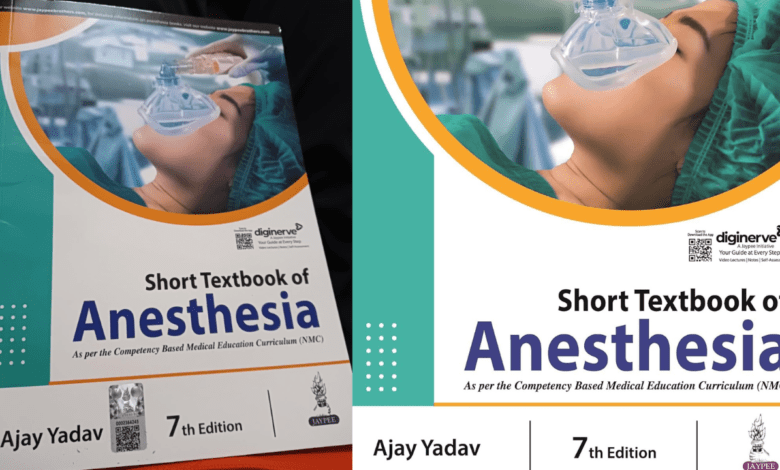
The Short Textbook of Anaesthesia by Ajay Yadav is a concise, student-friendly guide that explains anaesthesia in a clear, practical manner. Written especially for beginners, this book avoids heavy theory and focuses on the essential concepts needed to understand anaesthesia in real clinical settings. It is widely used by MBBS students, anesthesia technology students, operation theatre technicians, nursing students, and allied health learners.
Anesthesia can feel complex at first—different drugs, machines, and monitoring systems all working together. This textbook simplifies those ideas using easy language, logical flow, and exam-oriented presentation, making it ideal for early learners. If you are looking for a reliable foundation before moving on to larger reference books, this text fits that role perfectly.
About the Author – Ajay Yadav
Dr. Ajay Yadav is known for presenting anaesthesia topics in a clear, structured, and learner-focused style. His approach emphasises:
- Concept clarity
- Clinical relevance
- Easy recall for exams
The writing reflects practical experience, helping students connect textbook knowledge with operating theatre practice.
Purpose of the Book
The main aim of the Short Textbook of Anesthesia is to:
- Introduce anesthesia in a simple and understandable way
- Build a strong foundation for beginners
- Support exam preparation and viva
- Help paramedical and OT students understand their role in anesthesia care
This book is not meant to replace advanced reference texts. Instead, it acts as a first step into the subject.
Who Should Read This Book?
This textbook is suitable for:
- MBBS students (early clinical years)
- BSc / Diploma in Anesthesia Technology
- Operation Theatre Technicians
- Nursing students
- Allied health science students
- Exam aspirants in medical and paramedical fields
If you are new to anesthesia, this book is an excellent starting point.
Basic Concept of Anesthesia
What Is Anesthesia?
Anesthesia is the use of medicines to:
- Relieve pain
- Cause loss of sensation
- Reduce awareness during procedures
It allows surgeries and medical procedures to be done safely and painlessly.
Types of Anesthesia Explained
The book clearly explains the major types of anesthesia:
General Anesthesia
- Patient becomes fully unconscious
- Used for major surgeries
Regional Anesthesia
- Only part of the body is numbed
- Includes spinal and epidural anesthesia
Local Anesthesia
- Small area is numbed
- Used for minor procedures
Sedation
- Patient is relaxed but conscious
Each type is explained with indications, advantages, and basic risks.
Pre-Anesthetic Assessment
One of the most important sections in the book covers pre-anesthetic evaluation.
Why It Is Important
- Identifies patient risk
- Prevents complications
- Improves patient safety
Key Points Covered
- Medical history
- Drug allergies
- Fasting status
- Airway assessment
Airway Management
Airway management is the backbone of safe anesthesia.
Topics Explained
- Normal airway anatomy
- Difficult airway concept
- Basic airway devices
Common Devices
- Face mask
- Endotracheal tube
- Laryngeal mask airway
The explanations are simple and clinically relevant.
Anesthetic Drugs Overview
The book introduces anesthesia drugs in an easy format.
Major Drug Groups
- Induction agents
- Inhalational agents
- Muscle relaxants
- Analgesics
Instead of complex pharmacology, the focus is on basic action and use.
Monitoring During Anesthesia
Monitoring is explained as a safety system.
Parameters Monitored
- Heart rate
- Blood pressure
- Oxygen saturation
- ECG
This section helps students understand why monitoring is essential, not just what machines do.
Spinal and Epidural Anesthesia
Spinal Anesthesia
- Common in lower abdominal and limb surgeries
- Simple explanation of procedure and effects
Epidural Anesthesia
- Used for labour pain relief and postoperative analgesia
Both techniques are explained step by step.
Post-Anesthesia Care
The book highlights that anesthesia care continues after surgery.
Recovery Room Care
- Monitoring until patient is fully awake
- Managing pain and nausea
Common Post-Anesthesia Problems
- Vomiting
- Drowsiness
- Shivering
Pain Management Basics
Pain control is a major responsibility of anesthesia care.
Pain Relief Methods
- Analgesic drugs
- Regional blocks
- Multimodal pain management
The concepts are kept simple and practical.
Anesthesia Complications
The book briefly covers possible complications such as:
- Low blood pressure
- Breathing problems
- Drug reactions
Early recognition and basic management are emphasized.
Role of Operation Theatre Staff
Anesthesia is teamwork.
Team Members
- Anesthesiologist
- OT technician
- Nurses
The book clearly explains how each member contributes to patient safety.
Why This Book Is Exam-Friendly
Students prefer this book because:
- Chapters are short and focused
- Headings are clear
- Language is simple
- Ideal for last-minute revision
It is especially useful for viva and theory exams.
How to Study This Book Effectively
Practical study tips:
- Read one chapter daily
- Make short notes
- Revise anesthesia drugs regularly
- Relate theory to OT postings
Strengths of the Book
- Beginner-friendly language
- Logical topic arrangement
- Practical approach
- Suitable for paramedical students
Limitations
- Not very detailed for postgraduate level
- Limited advanced anesthesia topics
This is expected, as the book is designed for basic learning.
Conclusion
The Short Textbook of Anesthesia by Ajay Yadav is an excellent introductory resource for anyone beginning their journey in anesthesia. It explains complex ideas in a simple, structured, and practical way, making it ideal for medical and paramedical students. For building a strong foundation before advancing to more detailed textbooks, this book is a smart and reliable choice.
Frequently Asked Questions (FAQs)
1. Is the Short Textbook of Anesthesia good for beginners?
Yes. It is written in simple language and focuses on core concepts.
2. Can OT technicians use this book?
Absolutely. It is very useful for OT and anesthesia assistants.
3. Does this book help in exams?
Yes. It is exam-oriented with clear explanations.
4. Is the language easy to understand?
Yes. The language is simple and student-friendly.
5. Is this book enough for clinical practice?
It gives a strong foundation. Clinical experience adds practical depth.